Video Game
In 1979 my dad bought the family a TRS-80 CoCo to soften the blow of moving to Calgary. I taught myself BASIC to draw and make music. Forty-six years later, I'm still at it.
by Michael Dargie · October 7, 2026 · 845 words · 4 min read
Way back in 1979 – I have written about this before – we moved from the GTA to Calgary. I was ten. To soften the blow of leaving the land of trees, rocks, and water and arriving in the land of trees, rivers, and Chinooks, my dad bought the family a TRS-80 CoCo, one of the first-ever colour computers.
I taught myself BASIC so that I could draw and make music on the computer. This set in motion a journey for the ages, ranging from hacking Radio Shack computers in Market Mall to drawing complex digital art and designing 8-bit musical masterpieces to desktop publishing and graphic design.
I always wanted to design video games, and back when I was running Applied Multimedia Training Centres, I briefly flirted with the idea of giving it all up, running away to BioWare in Edmonton, and joining the digital fray. Alas, I did not. I had responsibilities here in Calgary that prevented me from being daring.
Fast forward to today. I have responsibilities, sure, but the older I get, the more inclined I am to just try different things out. When I shuffle off this mortal coil, I don’t want it said that I didn’t wring every last moment out of this blink of human existence.
Say what you will about AI, but for the past six years it has changed how I approach my creative practice. It has handed me a brush and palette that ten-year-old me couldn’t have anticipated. I’m no Futurist. I’ve always been more of a Nowist.
Through my partnership with Calgary Economic Development and the Canadian Trade Accelerator Program, I met a filmmaker named Jay Dahl, a recent transplant from one of the prettiest parts of our country: Halifax, Nova Scotia. New Scotland.
There will be much more on this creative dynamic in stories to come, but Jay and I hit it off. His absurd view of the world and creative genius inspired me to dig deep into my bag of tricks and let loose the jackal of mischief.
I won’t say much about the project now – more will be revealed as we travel this weird and winding road of funding creative endeavours – but in the first weekend I created an insane trailer for what will become a feature film, using every tool at my disposal: iPhone video, royalty-free music and sound effects, Adobe After Effects and Premiere, Higgsfield and Seedance AI, heck, even Adobe Illustrator. It took me eight hours to spin up a 45-second trailer that normally would have had a $100K budget. We didn’t have that budget.
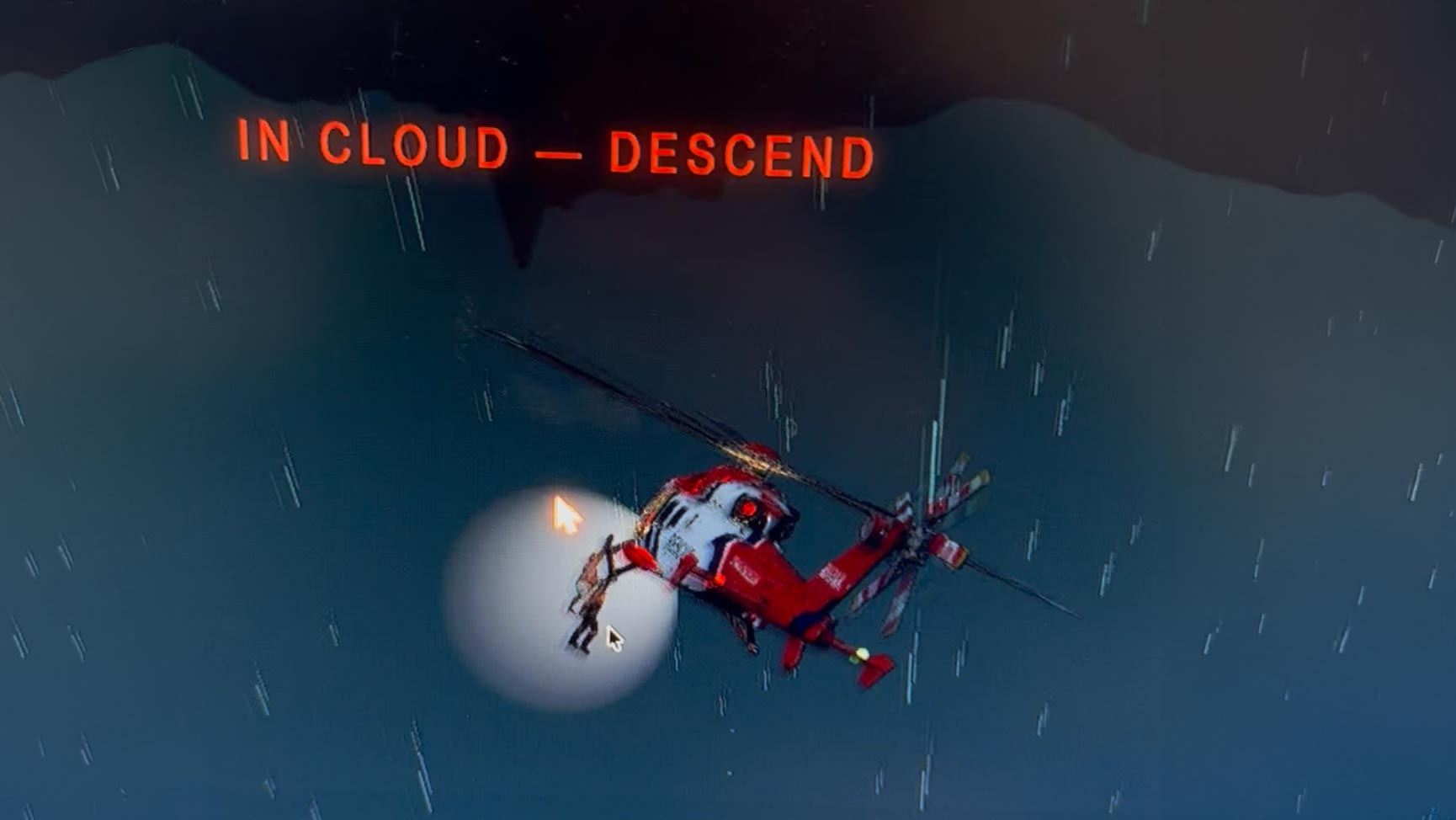
And then, still inspired, I decided to dabble with Claude Code and create the first two levels of a video game inspired by the film. It was blocky. And silly. And not even close to the level of the earliest Doom. But it worked.
WASD moved the character through a 3D world. Mouse buttons did stuff. There was 16-bit sound. I was thrilled. Jay was thrilled. We might have chest-bumped.
And before you know it, there I was pushing boundaries, saying things like, “I wonder what would happen if I did ___________.” In this case, it was: “I wonder if I can connect my coding environment directly to Blender 3D software and build levels and maps and rig characters?”
I can. I did. And right around that time, my son Keegan said, “Hey Dad, have you seen Meshy.ai yet?” Nope. I had not. But now I have.
Meshy.ai lets you prompt 3D characters and assets into existence and then either print them on your 3D printer (another cool technology for another day) or rig them for animation and pull them into your stoopid video game project.
So fast-forward one week, and I have reimagined what this game could be. Is it a “prototype”? Not in the strictest sense of the word. It is more of a proof of concept that let me see what I could do with a handful of tokens and a creative streak that bent the universe. I built eight functional levels of a video game, from first-person mayhem to third-person exploration to hand-to-hand combat to puzzle solving to flying helicopters with realistic physics to escaping predators on a boat to finding bear love on the shores of Indian Arm, BC during a salmon run, complete with accurate topography pulled in from a variety of sources, including NASA.
“The terrain height comes from AWS Terrain Tiles, a free public elevation dataset on Amazon S3 that Mapzen built by merging NASA’s SRTM shuttle radar survey, Natural Resources Canada’s CDEM, and GEBCO bathymetry (so the water has a real floor), delivered as ‘Terrarium’ PNGs where each pixel’s RGB values encode a height in metres. Rivers, shoreline, paths, buildings and piers come from OpenStreetMap, pulled as a one-off Overpass export covering just the head of the arm.” – Claude Code, explaining what we did.
Ten-year-old Michael Dargie is living his best life and is very grateful for the chance to keep living like a curious ten-year-old in a curious fifty-something-year-old body.
if you liked this
Get the next one in your inbox.
The hand-written monthly letter, 100 Days round-ups at your pace — take either, or both.
// comments · 0
Start the conversation.